
As fossil fuel prices soar due to Trump’s Iran war, the UK Government’s plans for ‘energy independence’ could transform how British households power their homes, reports Josiah Mortimer
The Iran war – and the energy crisis it has triggered – has fired a rocket under the Labour Government’s need to wean Britain off fossil fuels.
Solar is currently a relatively small part of the UK’s energy mix, accounting for just 6.5% of our electricity supply in 2025. But that’s still significant, and crucially it’s rising. According to the national energy operator (Neso), at the end of January 2026 there was 21.8 GW of solar capacity in the UK across 1,951,000 installations. For context, that’s a lot more than our nuclear capacity which is 6.5GW in the UK, though it provides a more stable, constant supply of power. The solar uptick marks an increase of 13% in the space of a year.
The capacity added over the last 12 months includes Cleve Hill solar farm in July, at 373 MW – this is the largest operational solar farm in the UK.
Between 2016 and 2021, the number of new monthly solar installations averaged about 3,000 per month. Over the past 12 months that has soared to 23,000 installations per month. Roughly 15,500 households every month in the UK are fitting solar panels.

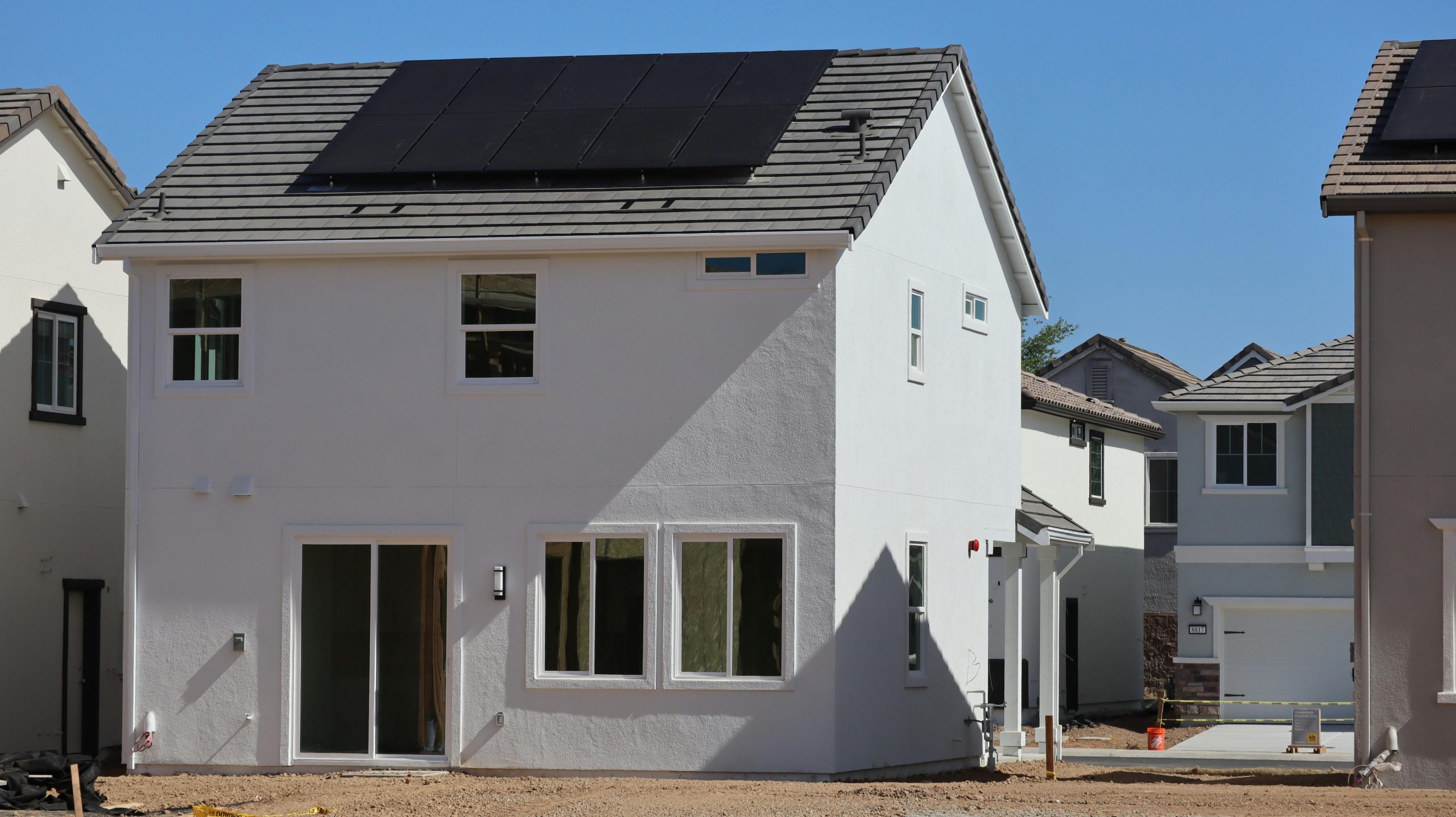
Modern Eco-Friendly Home with Solar Panels (Image: D. Goug/Pexels)
And over the course of 2025, 268,000 installations came online, the most new installations in any year. The 2.7 GW of new capacity added in 2025 was the highest annual figure for a decade.
However, some clouds are on their way.
Nearly 98% of Europe’s solar imports came from China as of mid-2025, and European manufacturers remain 30–40% more expensive than Chinese competitors. So what China does on tax rates and tariffs matters.
Read more: Byline Times

