
Rocketing fuel prices triggered by the Iran war have led to a growing interest in electric vehicles, as charging costs get cheaper.
Prices at the pump have soared to £1.50 a litre as Iran continues its stranglehold on tankers passing through the Strait of Hormuz, following US and Israeli-led military strikes on the country.
At the same time, energy companies have slashed electricity tariffs for overnight EV-charging at home to as low as 3.5p/Kwh.
As a result, a growing number of drivers are now looking to switch to electric vehicles.
Online car marketplace, Autotrader, said there has been a 28 per cent increase in new car EV leads and five per cent for used EVs since the Iran war began on February 28.
Despite growing calls, Labour is refusing to scrap its planned fuel duty hike which would add another £3 to the cost of a fill-up from this September.

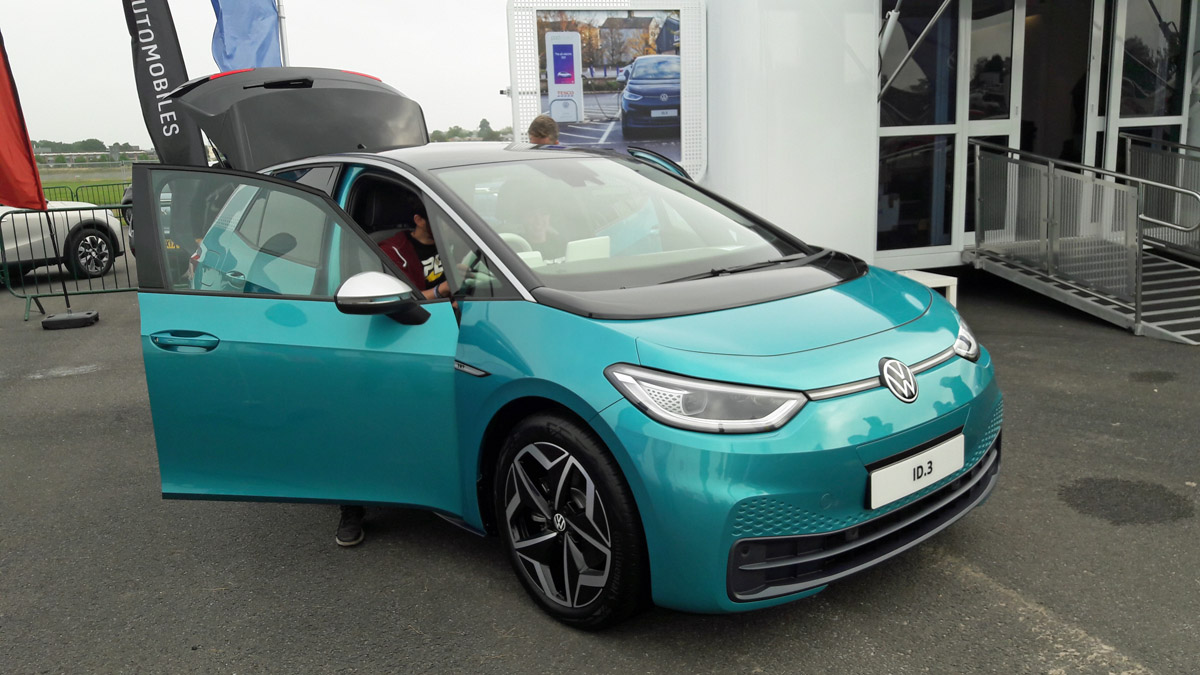
VW ID.3 EV (Image: TL/Tanjent)
The RAC said the average price of a litre of diesel at UK forecourts hit 185.23p, up by 30 per cent or 43p, since the war started on February 28.
Average petrol prices have reached 154.45p per litre, a rise of 16 per cent or 22p, over the same period.
ne fuel station in Chelsea, west London, was seen selling diesel for 299.9p per litre, with the equivalent rate for petrol set at 288.9p.
Meanwhile Octopus Energy has cut its most popular EV tariff, which allows up to six hours charging overnight, from 12p/kWh to 8p/kWh.
Fraser Brown, an analyst from the automotive consultancy MotorVise, told The Times: ‘It seems like a no-brainer, especially when the costs of charging are falling.’
Read more: This is Money on MSN

