
Energy analysts say solar power and air conditioning are ‘complementary technologies’ – but is the race to cool Europe down backfiring?
Europe’s solar boom is providing homes with hours of ‘free’ air conditioning (AC) – providing much-needed relief amid the latest heatwave.
Blistering temperatures have gripped much of the continent this week, resulting in widespread disruption and dozens of fatalities. Weather forecasts warn that the intense heat is starting to shift east – threatening huge parts of central Europe.
A new analysis by energy think tank Ember found that a typical UK home with rooftop solar generated enough electricity to power an AC unit for five hours per day during the hot spell.
But can AC ever really be environmentally friendly – even if it is powered by sunlight?
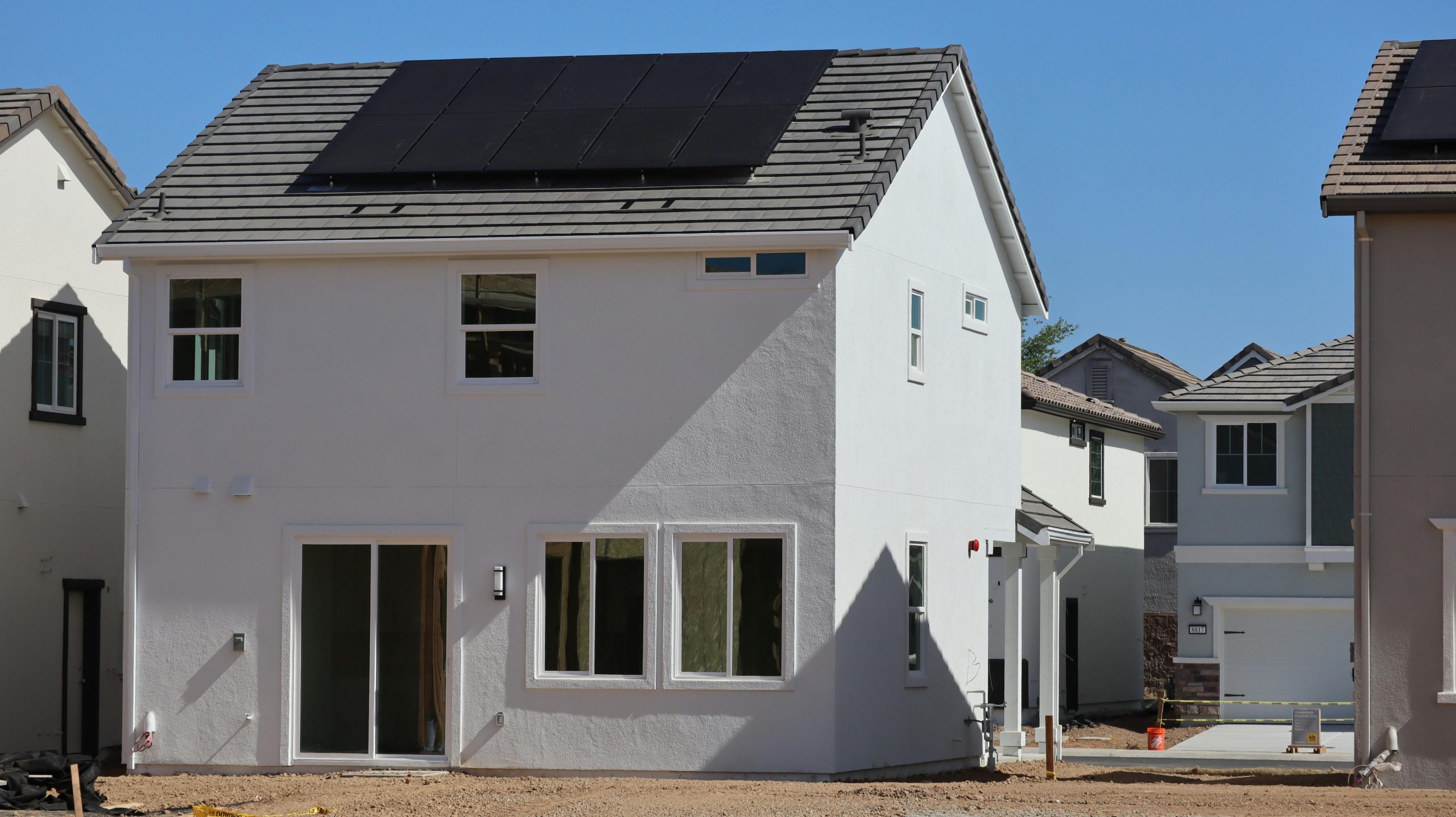
Modern Eco-Friendly Home with Solar Panels (Image: D. Goug/Pexels)
How bad is air conditioning for the planet?
The International Energy Agency (IEA) estimates that space cooling – which is mostly AC, but also includes fans – consumed around 2,100 terawatt-hours (TWh) of power in 2022. That’s around seven per cent of the world’s electricity from that year.
Some of this electricity comes from fossil fuels, which is why AC is often seen as a driver of carbon emissions. In 2022, the IEA estimated that space cooling caused around one billion tonnes of CO2 from electricity use – almost three per cent of total CO2 emissions.
While this may not seem significant, experts predict that AC units could triple in the next three decades – reaching a staggering 5.5 billion installations – as climate change continues to push up temperatures.
The EU, which has a low uptake of AC in comparison to regions like the US, is forecast to have more than 275 million AC units by 2050. France’s latest heatwave, which saw temperatures break records on Tuesday (23 June), has already sparked political debates over the country’s aversion to AC.
Read more: Euro News

