
Energy has become one of the most unpredictable household costs in recent years. For many homeowners, electricity bills, long-term energy security and environmental responsibility are rising priorities. In rural areas of the UK in particular, grid reliability can be an additional concern.
Against that backdrop, solar power has moved rapidly from being a niche technology to a mainstream option for the majority of UK homes. Advances in technology, falling installation costs and rising electricity prices mean that generating electricity from your own roof is now more financially and practically attractive than ever.
Solar photovoltaic (PV) systems allow homeowners to generate clean electricity directly from sunlight. That electricity can be used immediately within the home, reducing reliance on grid power. Any surplus can be exported back to the grid – creating a small additional income stream – or stored in a battery for use later in the day.
The result is a simple but powerful shift in how households think about energy – turning the home from an energy consumer into an energy producer, able to generate, store and use its own power.
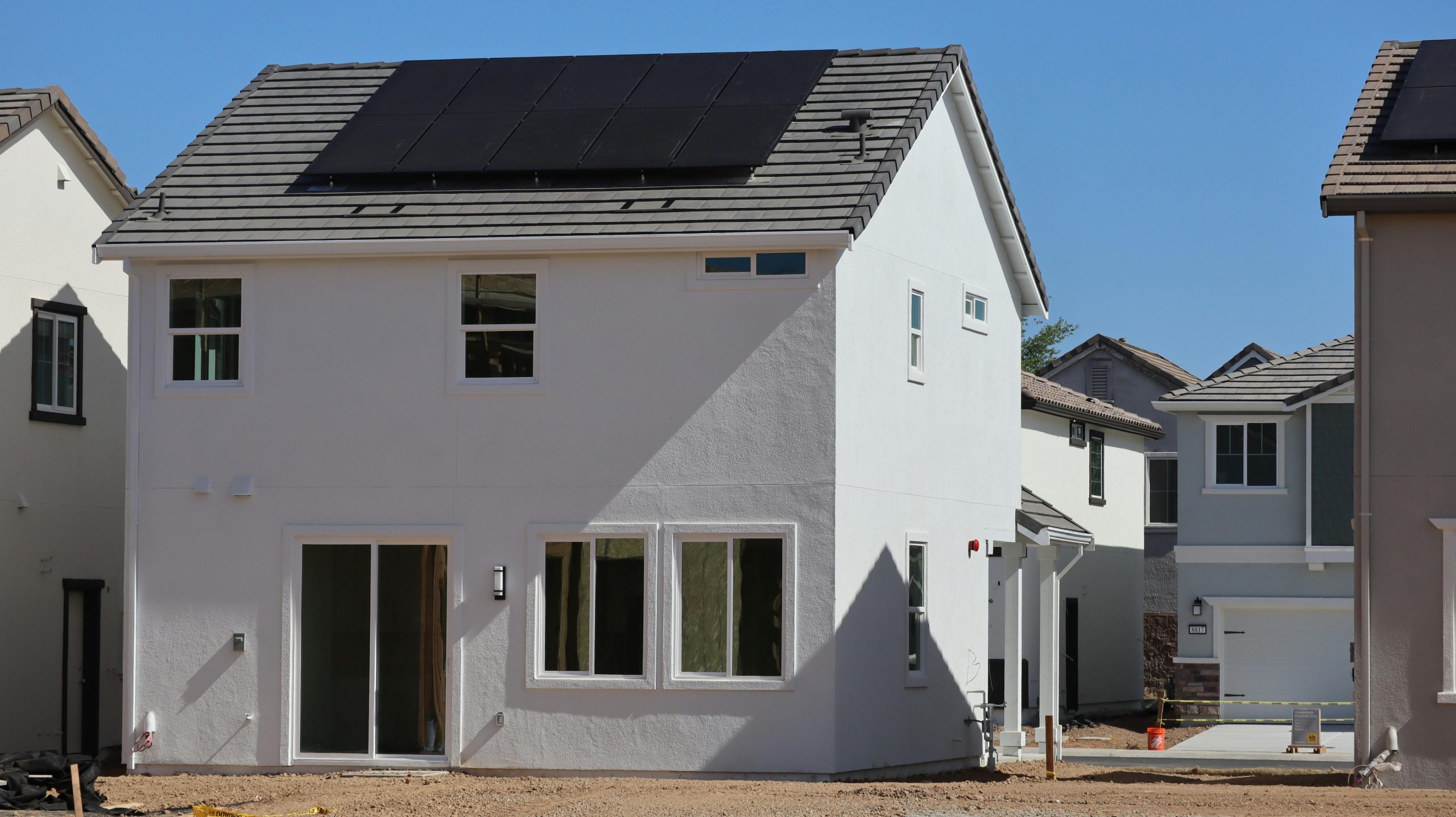
Modern Eco-Friendly Home with Solar Panels (Image: D. Goug/Pexels)
Lower energy bills and long-term savings
One of the most compelling reasons homeowners install solar panels is the potential to reduce energy bills.
A well-designed solar PV system can significantly reduce a household’s electricity costs – in many cases by up to 70–80%, particularly when combined with battery storage that allows more of the energy generated during the day to be used later.
For UK homes this can translate into annual savings of many hundreds of pounds, with some households saving £700–£1,000 per year. As electricity prices continue to rise over time, the value of those savings increases.
While installing solar panels represents an upfront investment, the long-term economics are increasingly favourable. Most residential systems have paid for themselves within eight to twelve years and continue to deliver large savings on electricity bills for a great many years after that – the solar panels themselves commonly lasting 25 years or more.
Read more: British Dressage

