
Why Your EV Stops Charging at 3am (and Your PV Panels Quit at Noon)
Here is a fact about your solar panels that nobody selling them will mention. On the brightest, most productive day of the year, they are the most likely to quietly switch themselves off.
Not a fault. Not a dodgy install. It’s just physics, working exactly as it should and the equipment following the rules, doing something the marketing people never chose to mention. Thing is, once you see it, you can’t unsee it, because it’s about to reshape the grid you’re plugged into.
Start with the one rule that governs everything here. Electricity flows from higher voltage to lower, just like the way water runs downhill. Your grid-tied inverter doesn’t get to opt out of that. For it to push power out onto the grid, to earn you the (albeit paltry) feed-in tariff you were promised, it has to sit at a voltage slightly above the grid around it. It cannot export into a wire at the same potential any more than water flows across a flat floor. To sell power, the inverter has to raise its voice above the crowd like a middle-manager trying to find their pineapple pizza in an all-hands meeting.
One inverter on a street is no problem as the nudge is tiny. But how high it has to reach depends on two things, how much power it’s pushing and how much resistance sits in the cable back to the substation. Push more power, or sit at the far end of a long thin rural line, and the voltage it must reach climbs.
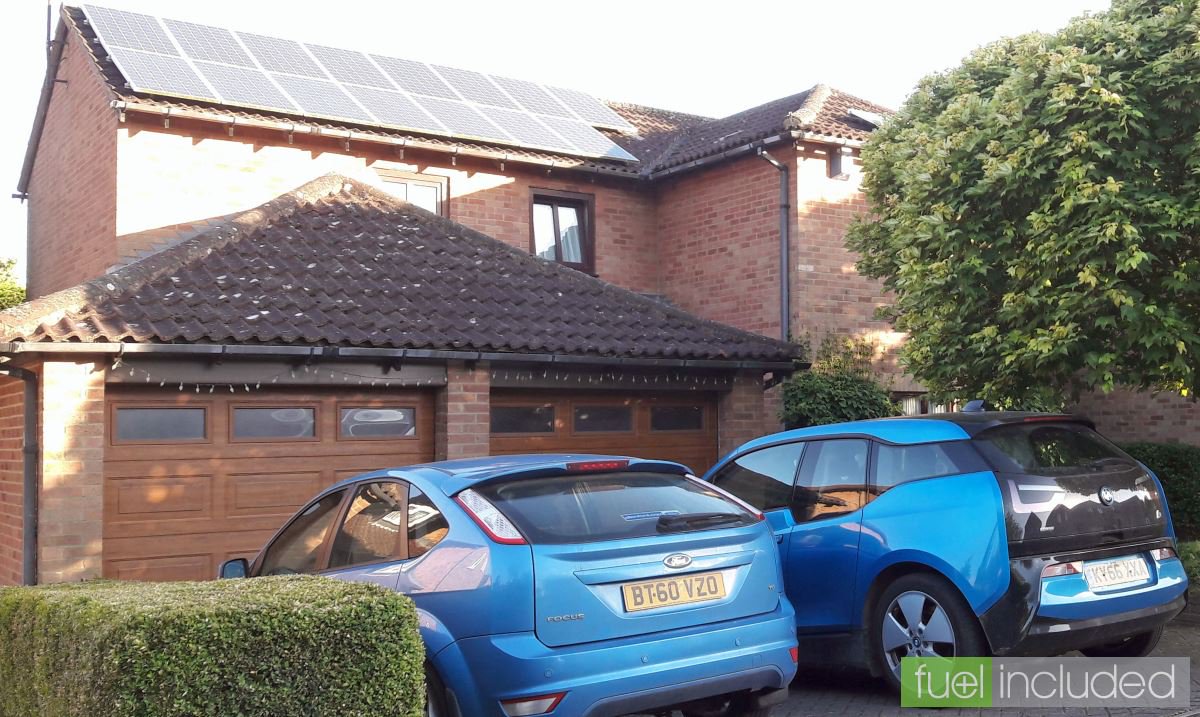
Now make it a sunny midday. Every roof on the feeder is generating, nobody’s home drawing load, and every inverter is trying to shout over every other one. The voltage on the whole feeder marches upward. There is a legal ceiling on that, 253 volts on the UK grid[1], and when an inverter’s own protection sees the voltage approaching it, it does the only thing it’s permitted to do.
First it throttles back, then it disconnects.
So the better the day, the more power there is to sell, the more likely your inverter is to curtail itself or trip out entirely. Your solar performs worst at the exact moment it should perform best. The sunniest day is the one that it chooses to sit out.
And it isn’t only the solar either. Everything on that same over-stressed feeder feels it. Plug in your electric car on a bright afternoon, precisely when you meant to charge it off your own roof, and the charger sees the same inflated voltage. EV chargers have an upper voltage limit too, and when the feeder is pushed high by a street full of exporting panels, the charger throws an “over voltage” fault and simply stops.[2] Same cause, different symptom. People blame the charger, or the car, or the installer. The real culprit is two doors down, on a roof, doing exactly what it was sold to do.
And here is the part that really catches people out, because it happens with no sun involved at all.
Read more: LinkedIn