
If you think the temperature uncomfortable today, let me take you to the last day of July 2052, the rays of the climbing sun reveal a city still sweltering in the residual heat of the day before.
From the air, London resembles a colossal refugee camp. Streets, gardens and parks are teeming with tents and cobbled-together shelters, within which the city’s residents have spent another uncomfortable night away from the heat traps that their houses and flats have become. After six days when the temperature peaked at about 40C, another scorcher is on the way.
Half-hearted attempts to upgrade insulation across the country’s housing stock ran out of steam and cash decades earlier, and most homes still have few barriers to the infiltrating heat. Almost all the country’s electricity is now from renewables, which has brought the cost down, but the relentless onslaught of extreme weather has driven an ever-deepening economic depression across the world. Many now have air conditioning, but can’t afford to run it.
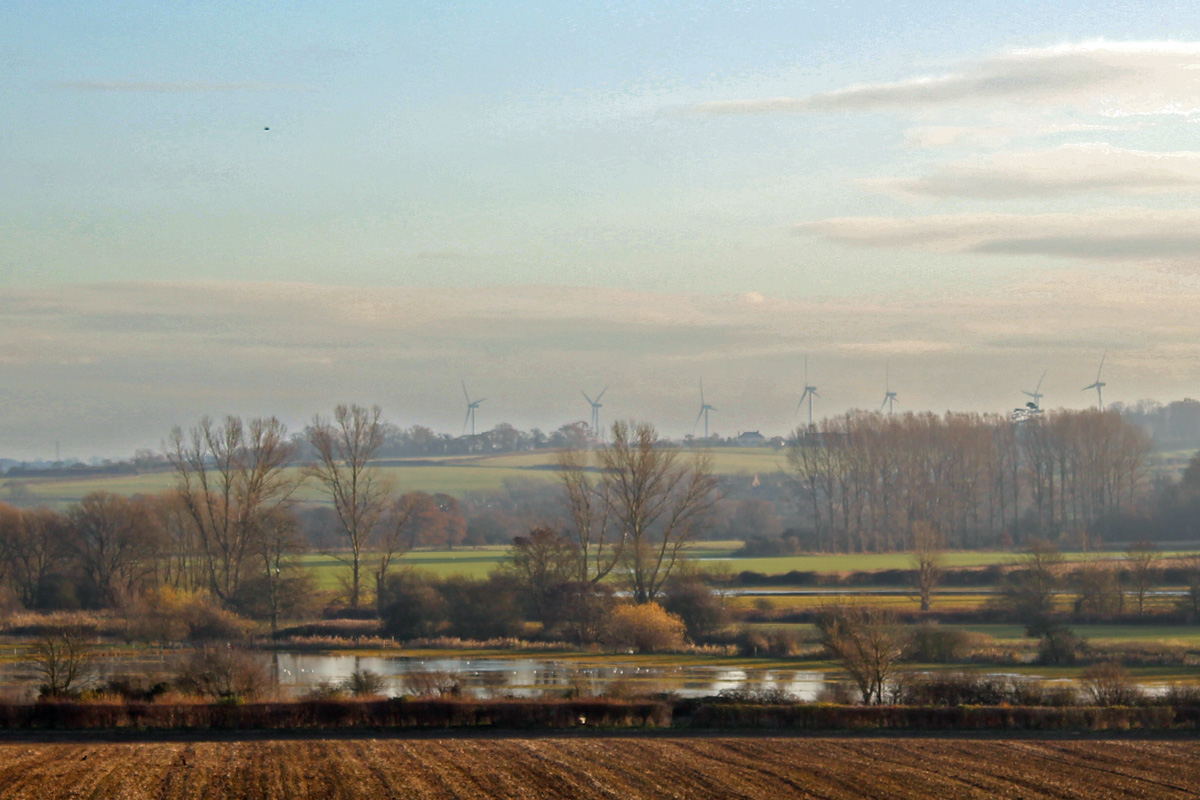
Severe Flooding, Against a Background of Wind Turbines: November 2012, Tyringham, Bucks. (Image: T. Larkum)
Early risers yawn and stretch as they queue at standpipes for water. A succession of dry winters and a spring drought have brought water rationing across the south-east of England, adding to the woes of those waking from another sticky, broken sleep. Ironically, there is plenty of rain now, and every day ends with an electric storm and torrential rain. Most of this, however, cascades directly into storm drains that can no longer cope, bringing surface flooding to lower-lying parts of the capital, but no end to the dearth of potable water.
Growing crowds cluster around state-run grocery stores that provide the basics at affordable prices. Failed harvests at home in the previous two years, and massively reduced food imports, as other nations stricken by extreme weather hold on to what they have, has meant the rationing of bread and other staples. Supermarkets still exist, but they are struggling to keep prices down, and so cater almost entirely to the wealthy.
Read more: The Guardian on MSN

