
The shift from ballasted to mechanically fixed solar
For many years, solar PV systems on flat membrane roofs have typically been secured using ballast. This approach became popular because it avoided penetrating the roof membrane, reducing the risk of leaks and allowing solar contractors to handle the entire installation independently.
However, new developments in roofing and solar mounting technology have transformed what’s possible. Modern mechanically fixed rooftop connections are now completely watertight, thermally broken, and fast to install, addressing the concerns that once made ballast the preferred choice.
As the market evolves, the advantages of mechanically fixed solar systems are becoming increasingly difficult to ignore.
Why mechanically fixed solar is the better choice
1. Mechanically fixed solar cannot move once installed
Ballasted solar arrays use a computation to work out how much ballast is required. There are different ways of interpreting the requirements meaning there are discrepancies across the market.
Recent freak storms with very high wind have seen solar arrays dislodged, moved and in some cases even blown off the roof.

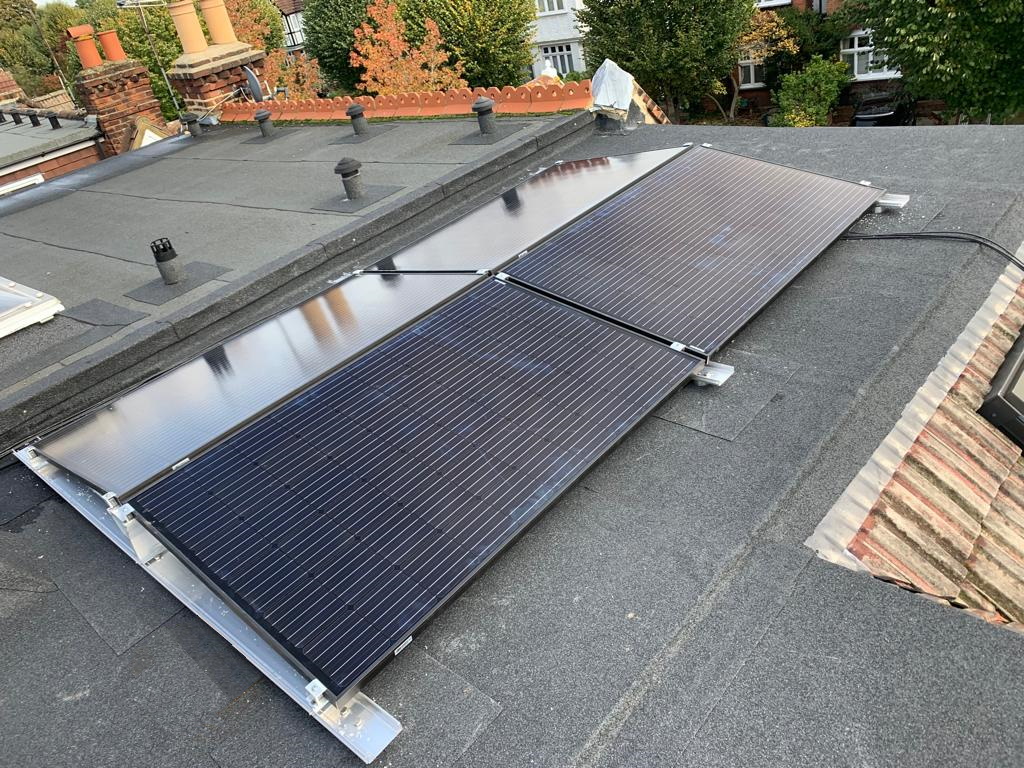
Solar panels with Nicholson fixings installed by Tanjent (Image: Tanjent Energy)
2. Mechanically fixed solar doesn’t vibrate in winds
Ballasted solar can be subject to small movements and vibration. This can lead to fatigue and damage to the roofing membrane. The common remedy is to lay the ballasted array on a sacrificial membrane. Whilst this helps to reduce potential damage it doesn’t stop the small movements and grit and dirt between the membrane layers can still result in damage and failure of the primary membrane.
Such damage typically lays outside of the roof warranty.
3. Mechanically fixed solar reduces the capacity requirement of the roof structure
Whilst solar PV panels and the support framework is relatively lightweight, the ballast can add significant load to roof structure especially on higher buildings.
- New roof structures can be designed to take this extra load, but this can result in significant extra cost.
- Existing roof structures might require strengthening works again resulting in disruption and cost.
Mechanically fixed solar enables solar PV to be used without the additional structural implications.
Read more: Nicholsonsts.com

