

A drone strike shut down Saudi Arabia’s East-West oil pipeline this week, knocking roughly 5 million barrels a day offline.
That’s about 5% of global supply, and it pushed Brent crude above $104. US diesel is at record highs.
That’s the fossil fuel crisis making headlines. The quieter one is on your own utility bill, and it’s not getting better either.
The East-West line, also called Petroline, is the pipe Saudi Arabia uses to move crude to the Red Sea and skip the Strait of Hormuz. With Hormuz already choked and the Houthis squeezing Red Sea shipping, that bypass was one of the last shock absorbers left in the oil market. Now it’s gone too. One analyst put it bluntly: the buffers that got the market through the past six months “have basically been worn away.”
For anyone driving on gasoline, there’s nothing to do here but pay. A combustion car gives you exactly one option: the pump. When a drone hits a pipeline halfway around the world, that’s your problem, and your only move is to hand over more money at the station.
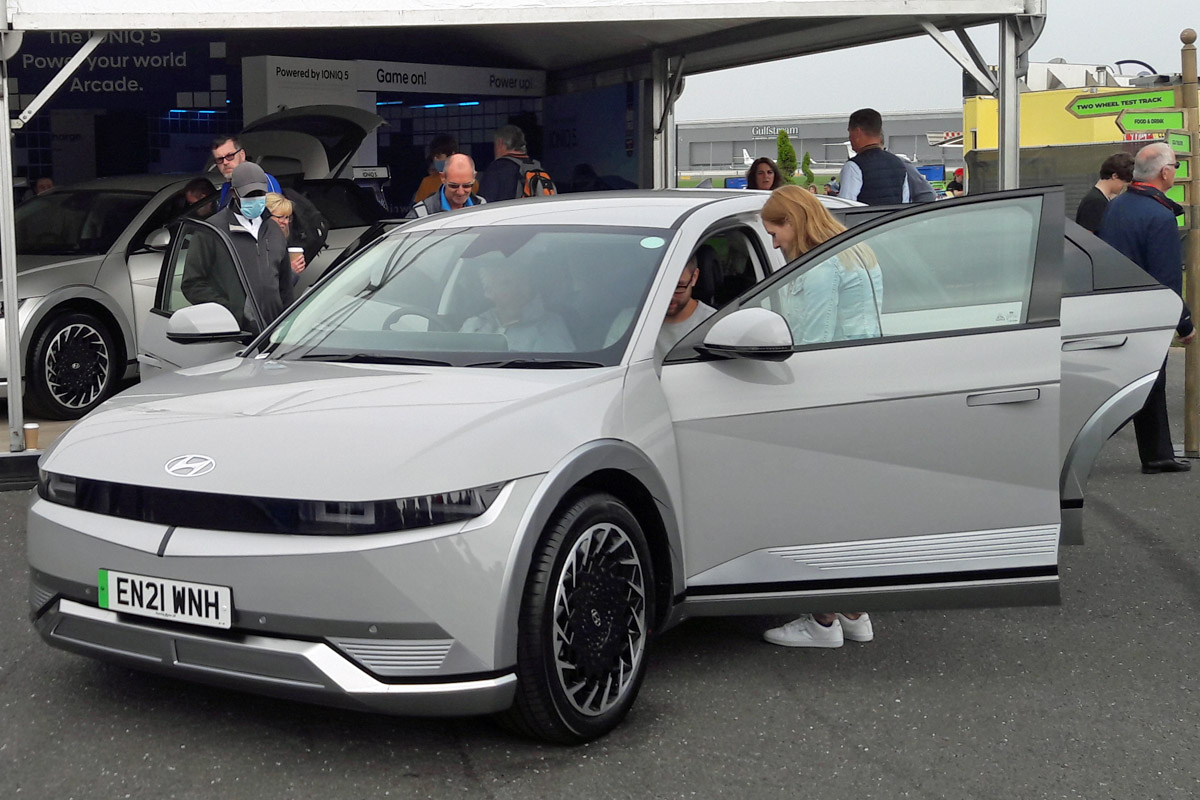
Hyundai IONIQ 5 EV (Image: TL/Tanjent)
An EV gives you a second option. And right now, a second option is the whole game.
The domestic energy crisis nobody’s bombing
Look at the chart of average US electricity prices and you’ll see the other half of the story. Power in the US city average just hit roughly $0.20 per kilowatt-hour. It was around $0.13 in 2020. That’s a jump of more than 50% in six years, and the line has gone nearly vertical since 2022.
Read more: Electrek

