
Energy bills in the UK are still expected to rise in the coming months, putting more pressure on household budgets despite the shaky ceasefire in the Gulf.
Meanwhile, use of solar power is growing across the UK, achieving 22 gigawatts (GW) of solar capacity from nearly 2 million installations, by February 2026.
In March, solar panel sales in the UK rose sharply, with one renewable energy firm reporting a 54% increase in sales. While rooftop solar is often seen as the most effective way to reduce electricity costs , it is not an option for all households, especially those living in flats or rented homes.
The UK government has plans to expand the use of solar as part of a wider focus on energy security. And it has now said plug-in solar will soon by available in the UK.
These are small systems, typically around 800W, that can be installed on balconies or external walls and connected directly to a household socket, without needing an electrician. They could offer a more accessible option for households that cannot install on rooftops.

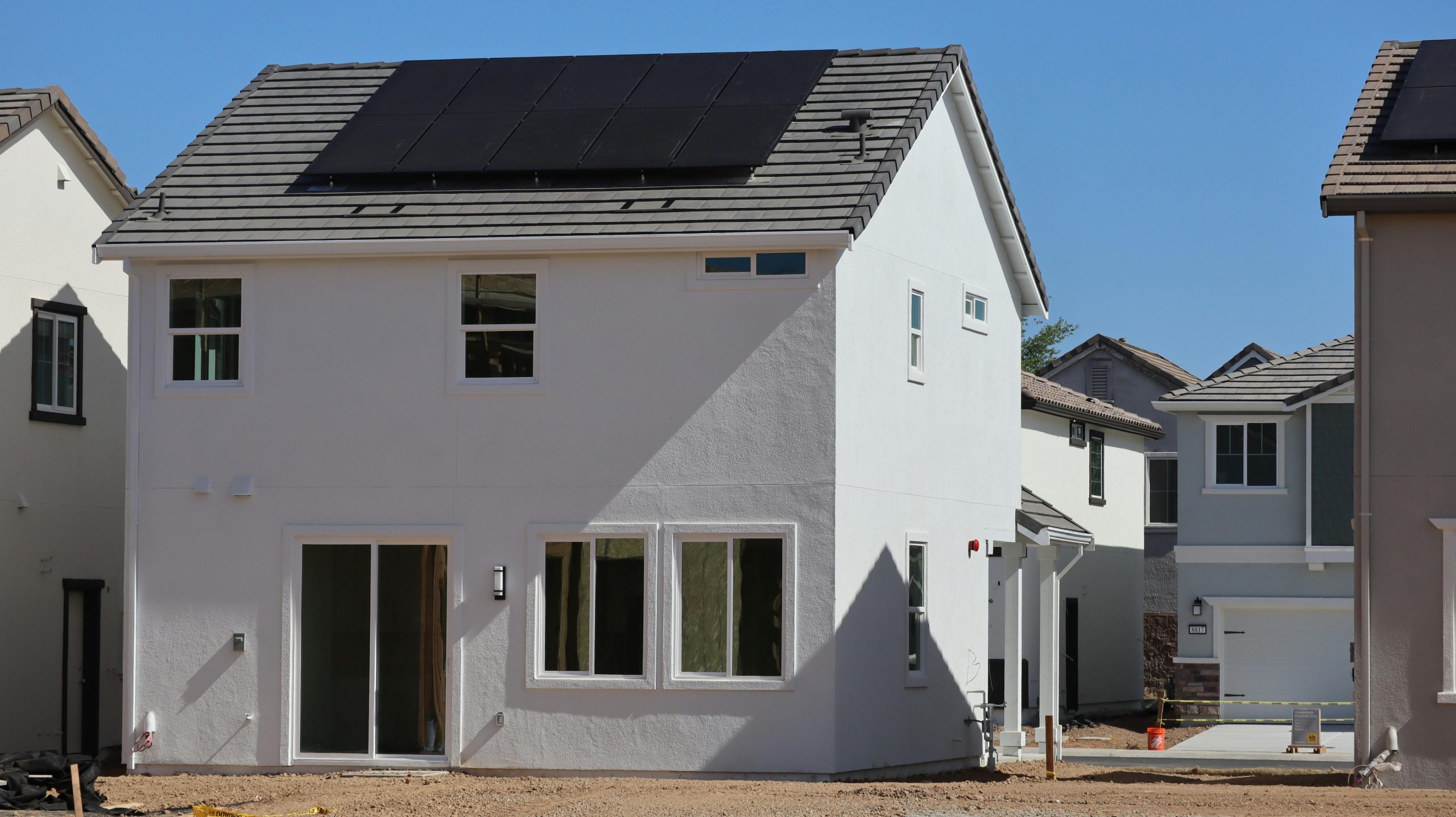
Modern Eco-Friendly Home with Solar Panels (Image: D. Goug/Pexels)
Although standards and safety guidance is yet to be set in the UK, these plug-in systems are already widely used in other parts of Europe. Some sources suggest there were around 4 million units being used in Germany in 2025.
How about plug-in solar?
The amount of electricity a plug-in solar system generates is relatively small.Performance can also vary depending on where it is installed. Factors such as the direction a balcony faces, shading from nearby buildings and how the panels are positioned can all reduce how much electricity is produced.
A typical UK household uses around 2,700-3,000 kilowatt hours (kWH) of electricity each year. Using a basic online calculator, a small 800W plug-in solar system, when vertically mounted on a balcony, is likely to generate around 150-350kWh, depending on orientation and shading. This means the system can provide about 5-12% of the electricity a home uses over a year. This could help a bit with bills, but not hugely.
What makes more of a difference is the time you use your energy. Solar generates electricity during the day, but most households need more in the evening. So much of this energy may go unused if the home is unoccupied during the day.
Benefits of batteries
To benefit the most from solar, households need to consider how they use electricity.
One simple way to make better use of solar is to shift electricity use into the daytime when possible, such as running appliances or charging devices when solar power is available.
Read more: The Conversation

